
Almost all Rudraksha sold today comes from two regions: the foothills of the Himalayas in Nepal, and the islands of Indonesia, mainly Java. Both are genuine Rudraksha from the same family of trees. The differences lie in size, appearance, price and how the beads are usually worn.
Nepali Rudraksha
Nepali beads are larger, usually between 15 and 30 mm, with deep, clearly defined mukhis that are easy to count. Because of their size and presence they are most often worn as a single bead on a pendant or in a short kantha mala around the neck. They are generally priced higher, and the rarer Mukhis from Nepal can be very valuable.
Indonesian Rudraksha
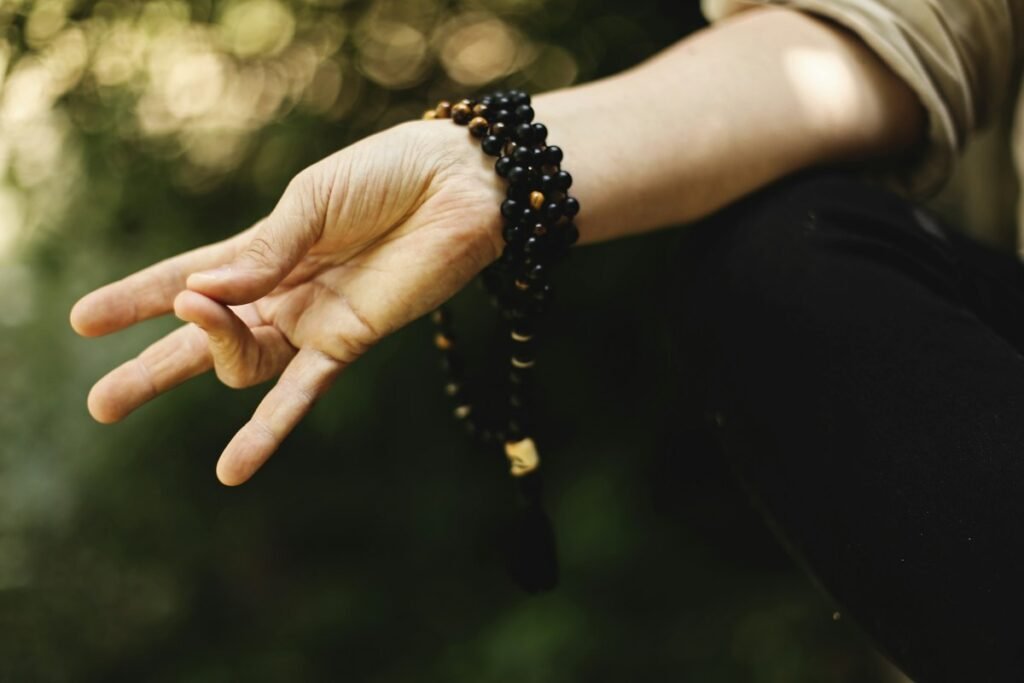
Indonesian beads are smaller, typically 5 to 12 mm, lighter and smoother, with finer mukhi lines. Their small size makes them comfortable to wear every day and ideal for 108-bead japa malas and bracelets. They are usually more affordable, which makes higher-Mukhi beads accessible to more people.
At a glance
- Size: Nepali beads are larger; Indonesian beads are smaller.
- Mukhi lines: deep and bold on Nepali beads; finer on Indonesian beads.
- Best for: pendants and kantha malas (Nepali); japa malas and bracelets (Indonesian).
- Price: Nepali beads usually cost more for the same Mukhi.
Which should you choose?
Both are traditionally regarded as effective. Choose Nepali if you want a single bead you can see and feel, worn close to the heart. Choose Indonesian if you want a mala for chanting, a bracelet for everyday wear, or a higher Mukhi within a smaller budget. Whichever you pick, make sure it comes with a lab certificate.
Browse both: see our Nepali Rudraksha and Indonesian Rudraksha collections.